It was clinically approved by both the Food and Drug Administration (FDA) and the European Medicine Agency (EMA) in 2014 for the treatment of relapsing-remitting multiple sclerosis (MS), showing a significant efficacy over 2 years versus placebo and a favorable benefit-risk profile in two phase-III clinical trials, although with several adverse effects such as nausea, diarrhea, abdominal pain and leukopenia in some patients [282, 283]
PMID 38629387
Since the first FDA approval of a GLP-1 in 2005, several variations of these products have been released, including weekly-dosed versions, injectables, orals, etc
Start with a low dose to assess the impact and any adverse events
CA: A Cancer Journal for Clinicians
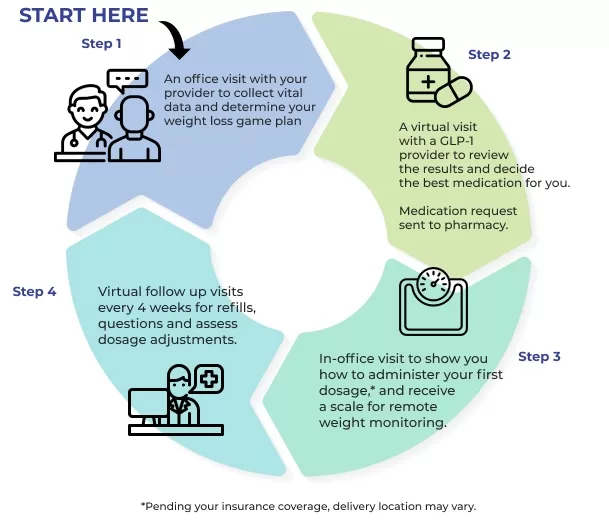
A medically supervised weight-loss plan can be structured around fat loss, metabolic improvement, and lean-muscle protection rather than scale loss alone













/assets/images/provider/photos/2787796.jpeg)